Water softeners in West Bend, WI
Water softeners for West Bend's 25 to 31 grain water
West Bend's water utility leaves hardness out of its annual report. The number residents get comes from the sewer utility instead, whose 2026 newsletter names 25 to 31 grains as the right setting for a softener. That is very hard water, and we price a whole-home softener for water like this in one phone call.
Call (262) 829-5961Mon to Fri, 7am to 5pm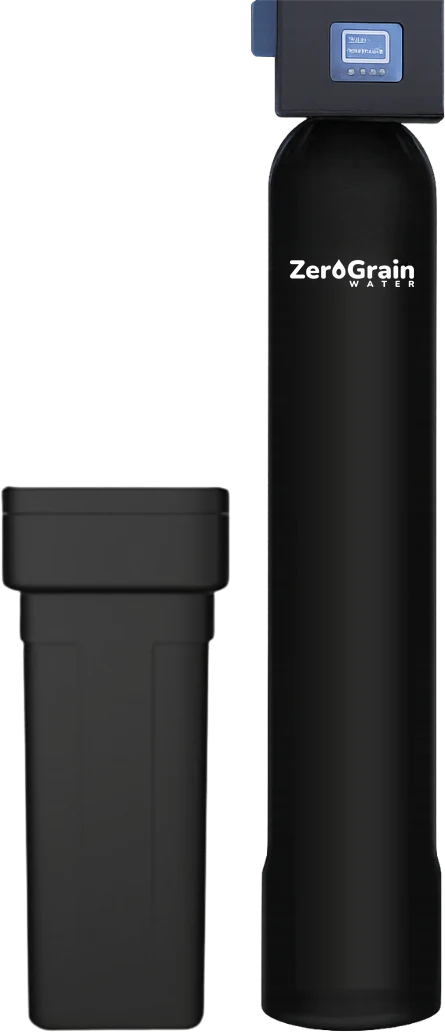
What is included
- A whole-home softener, its brine tank alongside, sized from West Bend's numbers and your household
- Reverse-osmosis drinking faucet for the kitchen sink, included and never sold apart from a softener
- Plumbed in by a licensed Wisconsin plumbing contractor
- Hardness read before any work and re-read at your tap until it hits zero
- Your price, one number, given over the phone, with no in-home sales call
- Phones open for quotes on weekdays, 7am to 5pm
West Bend water hardness
Source: City of West Bend Sewer Utility 2026 Newsletter; Wisconsin DNR compliance sampling, West Bend waterworks
Get your price
Send your details and we will call you with one price. Nobody comes to the house to sell you anything.
Why West Bend's softener number comes from the sewer utility
When a softener regenerates, brine from its tank rinses through and goes down the drain, and on a city sewer connection that discharge carries chloride to West Bend's treatment plant. The City runs a program to bring chloride down, so softeners are the sewer utility's business more than the water utility's.
Its 2026 newsletter names 25 to 31 grains as the right setting for a softener in its service area. A unit dialed higher than the water calls for burns extra salt, and that salt heads to the plant too.
Both the City's sewer use ordinance and state rules also ask for softeners that regenerate on demand. We supply demand-initiated softeners and no other kind.
Two state samples: 360 and 540
Wisconsin DNR compliance sampling in March 2026 found 360 milligrams per liter of hardness at one entry point to the city system and 540 at another. Converted at 17.1 milligrams per liter to the grain, that is about 21 and 32 grains per gallon, a spread that brackets the sewer newsletter's range.
The US Geological Survey puts water in its very hard class once it passes 180 milligrams per liter. West Bend's lower sample doubled that mark; the higher one tripled it.
With entry points that far apart, the number at your own faucet is worth knowing. Your faucet's reading comes before the plumber picks up a wrench, and again once the softener runs.
Every gallon comes from the City's own wells
West Bend's water utility serves the city from groundwater alone, drawn by wells scattered across West Bend. No Lake Michigan water enters the system and none is bought from a neighboring utility, so every hardness figure published or sampled for the city describes well water from right here.
What 25 to 31 grain water does around a house
Counted in grains, very hard on the USGS scale begins at 10.5, and the sewer utility's setting starts at 25. Water like that leaves white spots on drinking glasses and a cloudy film on shower doors and faucets, and in the water heater, scale builds up.
A softener's part is narrow: its resin holds on to calcium and magnesium and lets go of sodium in exchange, or potassium when the tank is filled with potassium chloride, so your faucets test at zero hardness.
Trenton, Barton and the Town of West Bend
Both the newsletter and the DNR figures stop at the edge of the city system. The Towns of West Bend, Trenton and Barton add roughly 11,800 people around the city, and a good share of those homes pump from private wells that no utility samples.
If yours is one of them, mention the well when you call and have any lab report within reach. The well water page goes through what a softener can and cannot do on a private well.
Why a West Bend price can be given over the phone
Sizing a softener comes down to two things: how hard the water is and how many people use it. For a city address in West Bend the first is already public, in the sewer utility's setting and the state's entry-point samples, and the second is a question you can answer in a sentence.
So nobody needs to visit before you hear a price. A home on a well simply swaps the published figures for its lab report, and the call runs the same way.
From a weekday call to a zero reading
Call between 7am and 5pm on a weekday. We will want your address, how many people share your water, and where the supply line comes into the house, along with whatever old softener stands there now. With that we work out the size and name a single price while you are still on the line.
There is no in-home sales call. The first visitor is the plumbing contractor, licensed in Wisconsin, arriving to do the installation.
That day any old softener is pulled, the new pair of tanks goes in, the bypass and drain line are plumbed with an air gap where the line meets the drain, and an RO faucet is mounted by the kitchen sink. Your tap is then tested until hardness reads zero.
Common questions
What setting does West Bend want on a softener?
Its sewer utility's 2026 newsletter says 25 to 31 grains for its service area. The state's March 2026 samples ranged from about 21 to 32 grains between two entry points, so a reading from your own faucet is useful.
Is the kitchen drinking faucet an add-on?
No. Every whole-home softener we supply includes a reverse-osmosis drinking faucet for the kitchen sink, and that faucet is never sold apart from a softener.
My house is in the Town of Trenton. Can I still call?
Yes, and the same goes for Barton and the Town of West Bend. Homes there on private wells get quoted the same way; just mention the well and any lab report.
Does anyone visit before I get a price?
No. The price is given over the phone, and the only visit after that is the licensed Wisconsin plumbing contractor arriving for the installation.
Why does a plumbing contractor do the installation?
Because the softener's drain line meets a drain at an air gap, and Wisconsin's statutes, in chapter 145, class that hookup as plumbing. Sizing, supplying and scheduling are ours; the plumbing is the licensed contractor's.
Is any of West Bend's water from Lake Michigan?
No. The City's water utility draws all of it from groundwater, through wells spread around West Bend, so every figure for the city describes well water.
Where can I look up West Bend's hardness myself?
Two places: the 2026 newsletter put out by the City of West Bend Sewer Utility, for the 25 to 31 grain setting, and the Wisconsin DNR's compliance sampling records for the West Bend waterworks, for the March 2026 readings of 360 and 540 milligrams per liter.